What Age Should a Child See a Speech Therapist?
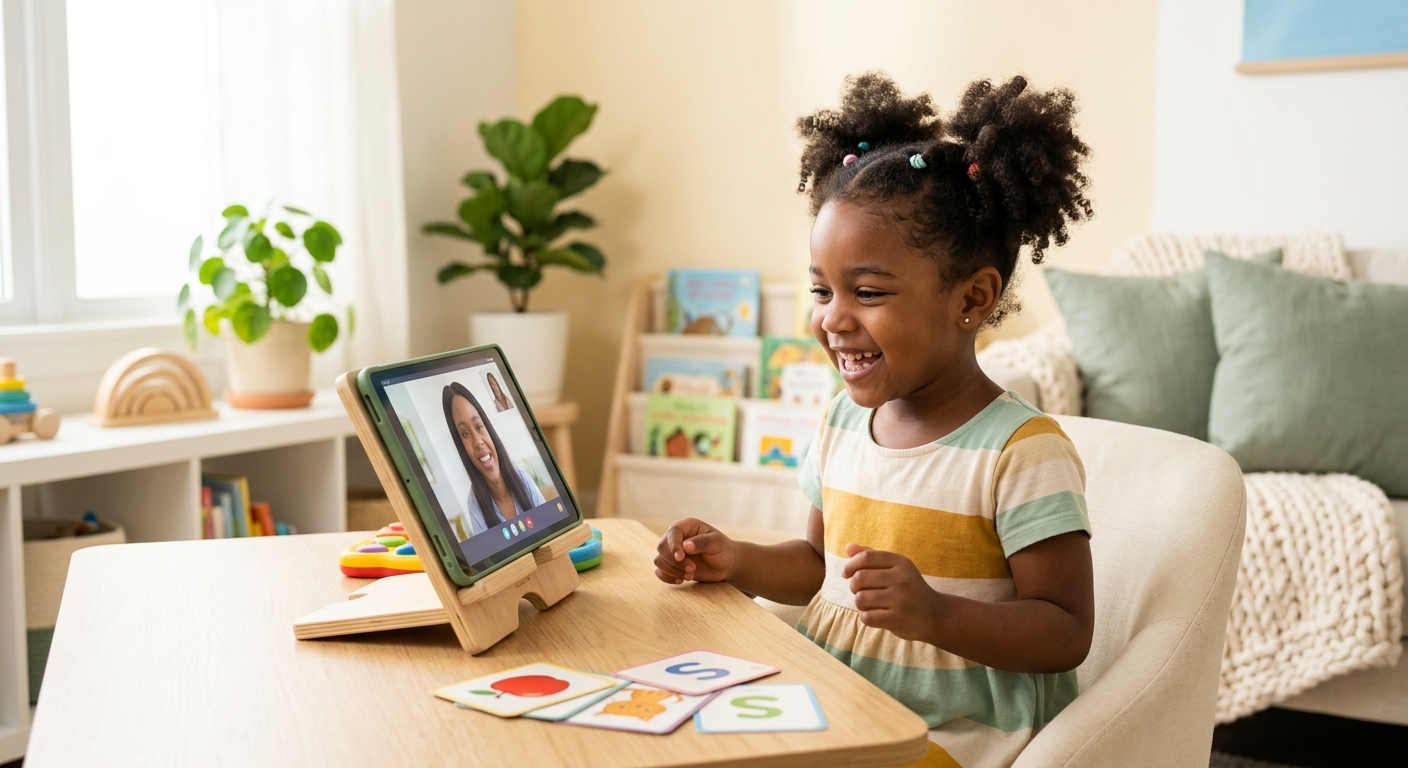
It is one of the questions I hear most from families across South Carolina and rural communities: what age should a child see a speech therapist? The short answer surprises a lot of parents. There is no minimum age, and when it comes to speech and language, earlier is almost always better.
You do not have to wait until your child is "old enough" or until problems become obvious. If something feels off, that instinct is worth listening to. Let's walk through the signs by age, gently bust the "wait and see" myth, and explain why early matters so much.
There's No Minimum Age
Speech-language pathologists work with children from infancy onward. Yes, even babies. Long before a child says their first word, they are building the foundation for communication through eye contact, babbling, gestures, and responding to sound. An SLP can support those early skills, coach parents, and catch concerns early. So if you are wondering whether your child is "too young," the honest answer is no. They are not.
Signs by Age to Watch For
Every child develops at their own pace, and these are general guideposts, not hard rules. Still, if you notice your child is consistently behind in these areas, it is worth a conversation with an SLP.
By 12 months
- Not babbling or making a variety of sounds
- Not using gestures like waving or pointing
- Not responding to their name or familiar sounds
By 18 months
- Few or no words
- Not pointing to show you things they find interesting
- Trouble understanding simple directions like "come here"
By 2 years
- Fewer than about 50 words
- Not combining two words, such as "more milk"
- Mostly imitating speech rather than using words on their own
By 3 years and beyond
- Speech that is hard for family or strangers to understand
- Not using short sentences
- Frustration, frequent meltdowns, or giving up when trying to communicate
- Stuttering that lingers or seems to cause your child stress
The "Wait and See" Myth
Many loving, well-meaning people, including some family members and even some pediatricians, will tell you to "wait and see" because "boys talk late" or "my cousin didn't talk until three and turned out fine." Sometimes a late talker does catch up on their own. But there is no reliable way to know in advance which children will and which will not, and waiting is not a neutral choice.
Every month a delay goes unaddressed is a month of missed practice during the years when a child's brain is most ready to learn language. An evaluation is low risk and high reward. If your child is on track, you get peace of mind. If they need support, you get a head start. Waiting only risks losing precious time.
Why Early Intervention Works
The first few years of life are an extraordinary window for language. Young brains are remarkably flexible, forming connections at a pace they never will again. When we support speech and language early, we are working with the brain's natural readiness rather than playing catch-up later.
Children who get early support often:
- Make faster progress with less effort
- Feel less frustration because they can express their needs
- Arrive at school more ready to learn and connect with peers
- Avoid the snowball of a small delay growing into a bigger gap
This is exactly why our therapy services are play-based and built around each child's strengths. Early help does not have to feel clinical or scary. For most children, it feels like fun.
What to Do If You're Unsure
If you have read this far, you probably have a question on your mind about your own child, and that is okay. You do not need to be certain before reaching out. A free consult is a relaxed, no-pressure conversation where we listen, answer your questions, and help you decide whether an evaluation makes sense.
There is no waitlist at Bloom, and our sessions are 100% online, so families across South Carolina and rural communities can get started without the drive or the wait. Curious how it works? See how online therapy works, explore our parent resources, or simply book a free consult. Whatever age your child is right now, today is a great time to start.